What is a construction invoice?
A construction invoice is the bill a builder, general contractor or construction company sends to request payment for completed work. On most projects it covers a stage of the job rather than the whole project, so it needs to show clearly what was done, what it cost and how much is still owed.
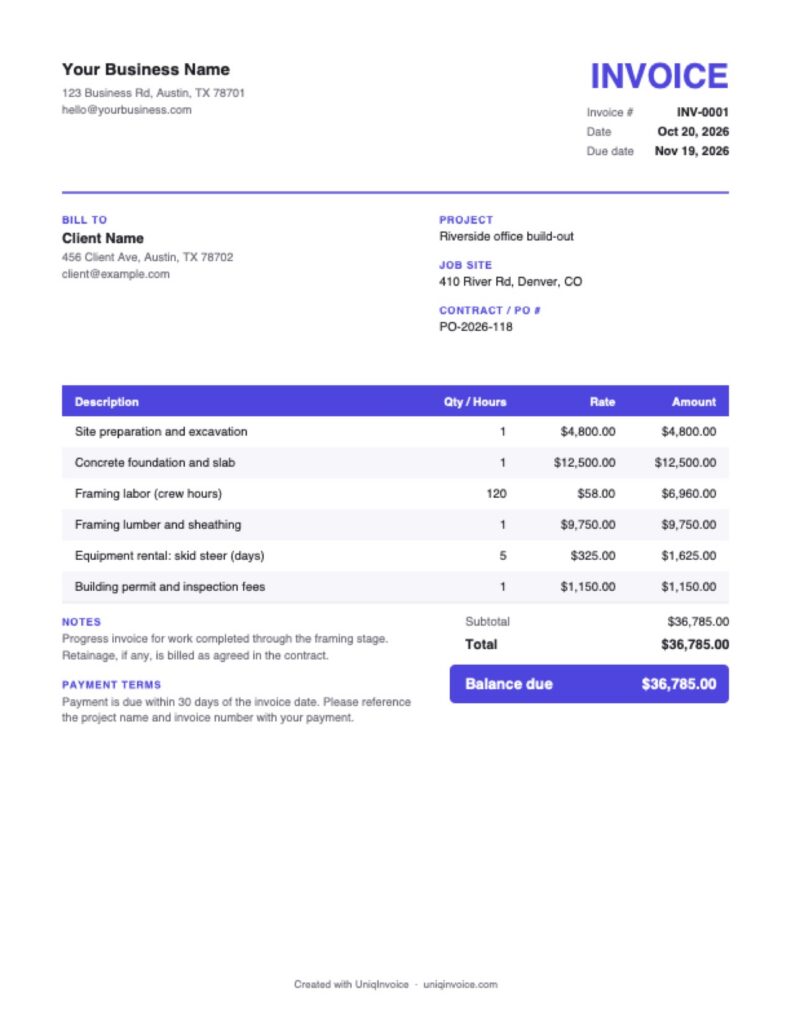
This free template is made for construction projects of any size. It has room for the project name, job site and contract or PO number, separates labor, materials, equipment and fees, and calculates the total and balance due for you.
What to include on a construction invoice
- Your company details: business name, address, phone, email and license number where required.
- Client and project: the client’s billing details, the project name, the job site address and the contract or purchase order number.
- Invoice number and dates: a unique number, the invoice date and the due date.
- Work completed: the stage or scope covered by this invoice, such as site work, foundation or framing.
- Labor: crew hours and rates, or fixed prices per task.
- Materials and equipment: materials supplied and equipment rental, with quantities and costs.
- Permits, fees and change orders: each on its own line so they are easy to verify.
- Payments and balance: amounts already paid, retainage if it applies, and the balance due.
- Payment terms: the due date, accepted payment methods and any late fee from your contract.
Progress billing and retainage
Most construction contracts pay in stages. Agree on the milestones before work starts, then send an invoice when each one is reached. Common stages are a deposit or mobilization payment, site work and foundation, framing, rough-in (plumbing, electrical and HVAC), finishes and final completion.
Some contracts also include retainage, a part of each payment that the client holds until the project is complete and accepted. Keep track of the retained amounts so you can bill them clearly on the final invoice.
How to fill out this construction invoice template
- Add your logo and company details at the top.
- Enter the client, project name, job site and contract or PO number.
- Check the invoice number, invoice date and due date. The due date is set 30 days ahead, and you can change it.
- Edit the sample lines for the work in this billing period. Enter hours or quantities and rates, and use Add line item for more lines.
- Enter tax if it applies, and any amount already paid in Amount paid.
- Review the notes and payment terms, then click Download PDF.
Tips to get paid faster on construction jobs
- Tie invoices to the contract. Use the same milestones, descriptions and PO numbers that appear in the contract.
- Document the work. Photos, inspection reports and signed change orders answer questions before they delay payment.
- Send invoices on time. Bill as soon as a stage is finished and keep a regular billing schedule on long projects.
- Track every invoice. On a large project it is easy to lose track of what was billed, paid and retained. A simple list of invoices and payments prevents disputes at closeout.
UniqInvoice keeps every project invoice in one place, shows which ones are paid or overdue, and sends reminders automatically, from your phone or computer.