What is a trucking invoice?
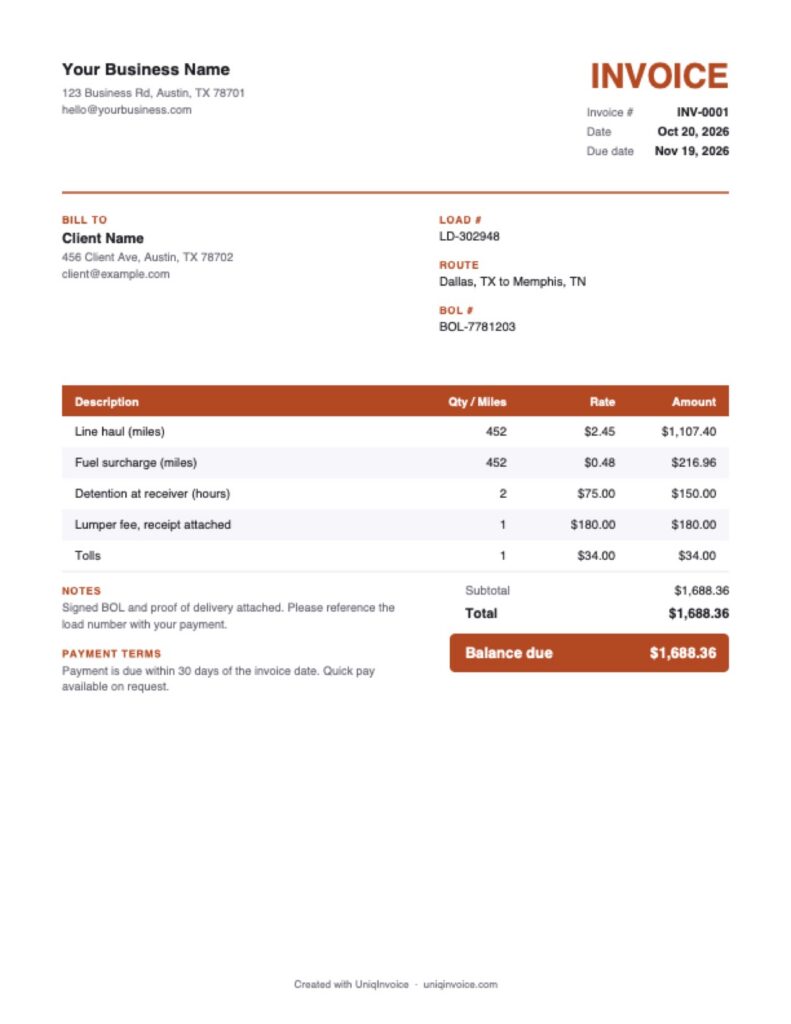
A trucking invoice, also called a freight invoice, is the bill a carrier or owner-operator sends to a broker or shipper after delivering a load. It shows the route, the load and BOL numbers, the line haul rate and any extra charges such as fuel surcharge, detention or lumper fees. Brokers process many invoices, so a clear, complete invoice is the key to getting paid on time.
This free template includes fields for the load number, route and BOL number, uses a miles column for line haul and fuel surcharge, and adds up all charges automatically.
What to include on a trucking invoice
- Carrier details: company name, address, phone, email and MC and DOT numbers.
- Bill to: the broker or shipper, with their billing address.
- Load details: load number, BOL number, pickup and delivery locations and dates.
- Line haul: loaded miles and rate per mile, or a flat rate from the rate confirmation.
- Fuel surcharge: per mile or flat, as agreed.
- Accessorial charges: detention, layover, lumper fees, tarping, extra stops, tolls.
- Attachments: a note that the BOL, proof of delivery and receipts are attached.
- Terms: the due date and remittance details, or quick pay options.
How to fill out this trucking invoice template
- Add your logo and carrier details, including MC and DOT numbers in the From section.
- Enter the broker or shipper, the load number, the route and the BOL number.
- Check the invoice number and dates. The due date is set 30 days ahead.
- Enter loaded miles and the rate per mile for line haul and fuel surcharge.
- Add accessorial charges from the rate confirmation and your receipts.
- Review the notes and terms, then download the PDF and send it with your paperwork.
Common trucking charges explained
Line haul is the base rate for moving the freight. Fuel surcharge covers changes in diesel prices. Detention is paid when the truck waits beyond the free time at pickup or delivery. Lumper fees cover third-party unloading, usually reimbursed with a receipt. Layover applies when a delivery is pushed to another day. Make sure each charge matches the rate confirmation, because brokers often reject charges that were not agreed in advance.
Working with factoring companies
Many owner-operators use factoring to get paid within a day or two instead of waiting 30 days or more. A factoring company buys your invoices for a fee and collects payment from the broker or shipper.
If you factor your invoices, the factoring company will usually tell you how to set them up: the remit-to address and payment details often need to be the factor’s, not yours, and the broker may receive a notice of assignment. Use the notes and terms on this template for those details, and keep a copy of every invoice and its paperwork. Read your factoring agreement carefully, including fees, recourse terms and minimum volumes.
Tips to get paid faster
- Invoice the same day you deliver. Scan the signed BOL and send the invoice right away.
- Send complete paperwork. Missing proof of delivery or receipts is the most common cause of delays.
- Match the rate confirmation. Use the same load number and rates the broker sent you.
- Track every load. With many brokers and loads, a list of open invoices shows who is late.
UniqInvoice helps owner-operators create invoices from the cab, track payments by broker and follow up automatically on overdue loads.