What is a web design invoice?
A web design invoice is the bill a web designer, developer or agency sends for building or maintaining a website. Website projects usually combine one-time work, such as design and development, with recurring services, such as hosting and maintenance, so the invoice needs to separate the two clearly.
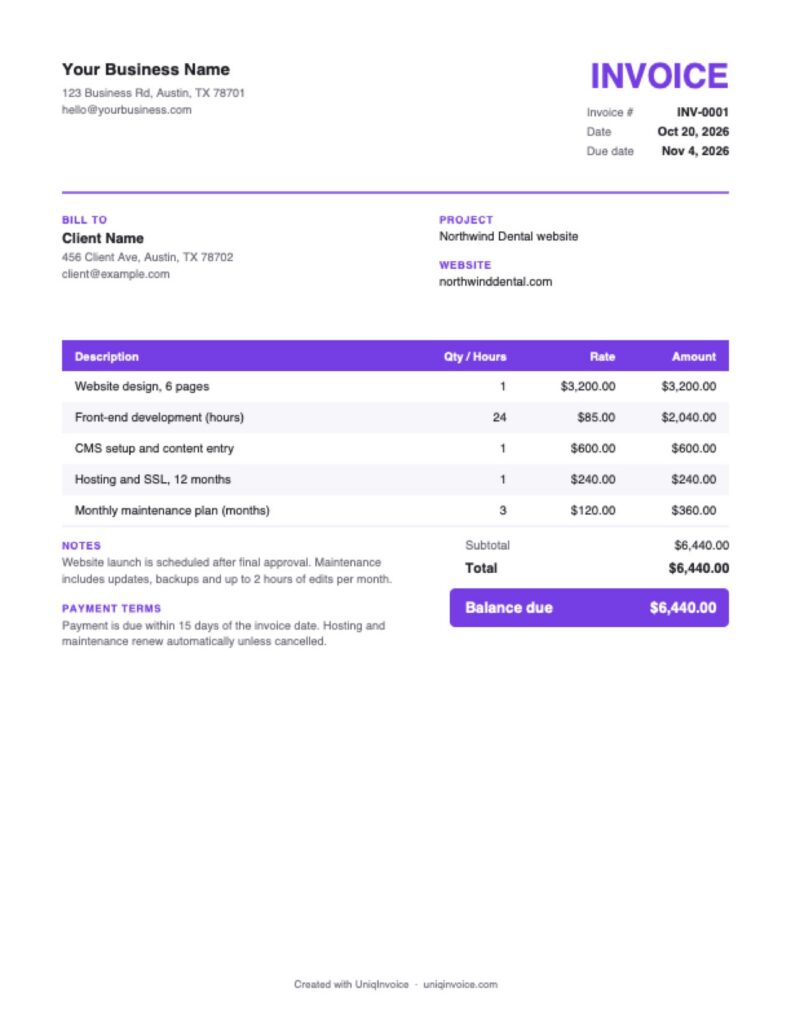
This free template includes the project name and website domain, supports project prices and hourly development, and adds up totals and the balance due automatically.
What to include on a web design invoice
- Your details: your name or agency, website, email and phone.
- Client and project: the business you are billing, the project name and the domain.
- Milestone: which stage the invoice covers, such as deposit, design approval or launch.
- Design and development: pages, templates, features and development hours.
- Content and setup: CMS setup, content entry, SEO basics and training.
- Third-party costs: themes, plugins, fonts, domains or stock images.
- Recurring services: hosting, SSL and maintenance, with the period covered.
- Terms: due date, renewal terms and handover after payment.
How to fill out this web design invoice template
- Add your logo and business details.
- Enter the client, project name and website domain.
- Check the invoice number and dates. The due date is set 15 days ahead.
- Edit the lines for design, development hours, setup and recurring services.
- Enter any deposit already paid in Amount paid.
- Review the notes and terms, then download the PDF.
Milestone billing for website projects
A common structure is a deposit of 30 to 50 percent to start, a payment at design approval, and the final payment at launch. Milestones keep cash flowing on long projects and make sure the client stays engaged at each step. On every invoice, name the milestone and show previous payments so the remaining balance is always clear.
After launch, recurring hosting and maintenance invoices turn one-time clients into steady monthly revenue.
Example line items for website projects
Breaking a website project into clear line items shows the client what goes into the price. Common items include:
- Discovery, planning and sitemap
- Wireframes and visual design, per page template
- Responsive front-end development
- CMS integration and content migration
- E-commerce setup and payment configuration
- Basic on-page SEO and analytics setup
- Client training session
- Domain, hosting and SSL renewal
- Monthly maintenance and updates
Keep one-time work and recurring services on separate lines, or on separate invoices after launch. It helps clients budget, and it makes renewals easier to explain.
Tips to get paid faster
- Write a clear scope. List the pages and features included, and bill extras separately.
- Tie payments to milestones. Do not start the next stage until the current invoice is paid.
- Launch after final payment. Or keep admin ownership until the balance is settled.
- Automate recurring billing. Monthly maintenance invoices should not depend on you remembering to send them.
UniqInvoice handles milestone invoices, recurring hosting and maintenance billing, and automatic payment reminders.