What is a freelance invoice?
A freelance invoice is the bill an independent professional sends to a client for completed work. Writers, developers, designers, translators, virtual assistants and many other freelancers use invoices to get paid, keep records for taxes and look professional to clients.
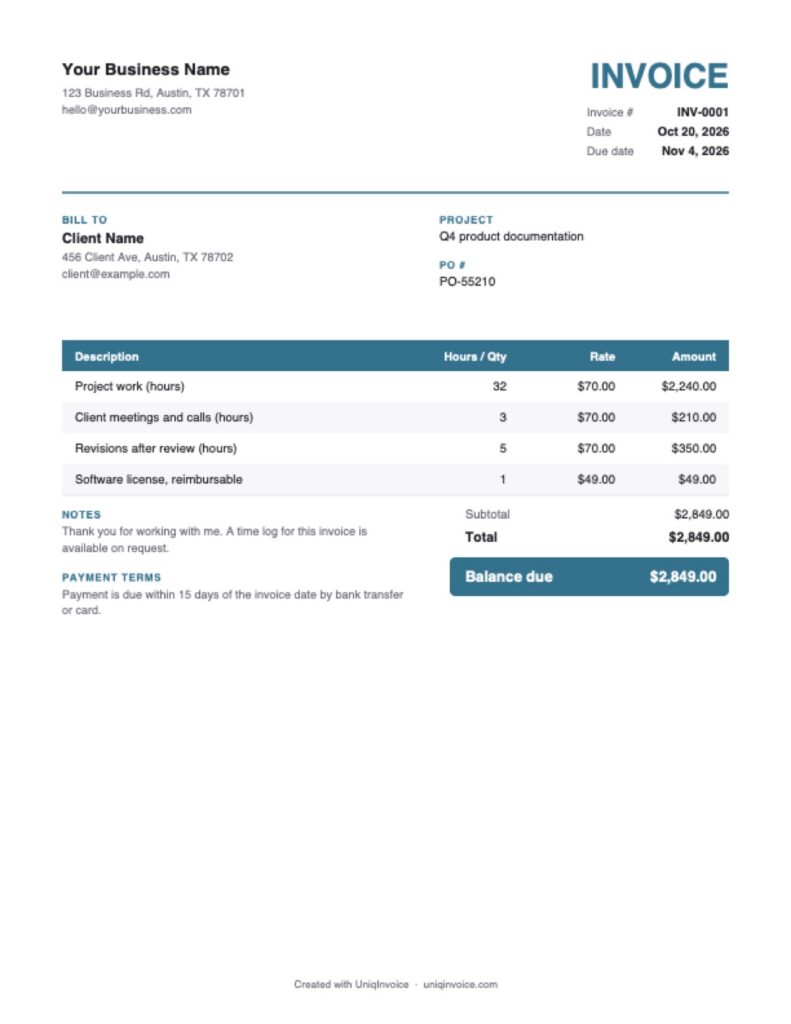
This free template works for any type of freelance work. Bill by the hour or by the project, add expenses, include a project name and PO number, and download a clean PDF in a few minutes.
What to include on a freelance invoice
- Your details: your name or business name, email, phone and, if you have one, a website.
- Client details: the company and contact person you are billing.
- Invoice number: a unique number for each invoice.
- Dates: the invoice date and the due date.
- Project and PO number: helpful for clients with an accounts payable team.
- Work performed: tasks or deliverables with hours and rates, or a fixed price.
- Expenses: reimbursable costs agreed with the client.
- Total and payment terms: the amount due, how to pay and by when.
How to fill out this freelance invoice template
- Add your logo if you have one, and your contact details.
- Enter the client’s details, the project name and the PO number if they gave you one.
- Check the invoice number and dates. The due date is set 15 days ahead.
- Describe the work. Enter hours and your hourly rate, or quantity 1 and a project price.
- Add expenses, tax if it applies, and any deposit already paid.
- Review the notes and terms, then download the PDF and send it.
Hourly, project or retainer?
Hourly billing is simple and fair when the scope changes often. Keep a time log so the client can see where the hours went. Project pricing works when the deliverables are clear, and it rewards you for working efficiently. Retainers give you steady monthly income from clients with ongoing needs.
Whatever you choose, agree on it in writing before you start, and describe the work on the invoice in words the client will recognize.
Common freelance invoicing mistakes
- No invoice number. Clients and accountants need a unique number to track payments.
- No due date. “Due on receipt” is often read as “whenever”. A specific date gets better results.
- Sending it to the wrong person. Ask who handles payments, especially at larger companies.
- Wrong currency. For international clients, choose the agreed currency in the toolbar above the invoice.
- Forgetting expenses. Agreed costs such as software or travel should be billed with the work.
Small details like these are the most common reasons freelance invoices are paid late.
Tips to get paid faster as a freelancer
- Invoice as soon as the work is done. Waiting only delays your payment.
- Ask for a deposit from new clients. 25 to 50 percent up front is common for projects.
- Make it easy to pay. Include clear payment details and accept cards if you can.
- Keep a list of open invoices. Freelancers often juggle many clients. Knowing who owes what helps you follow up on time.
- Send polite reminders. A short message before and after the due date works for most late payers.
UniqInvoice is built for freelancers: create invoices on your phone or computer, accept card payments, track who has paid and send automatic reminders.