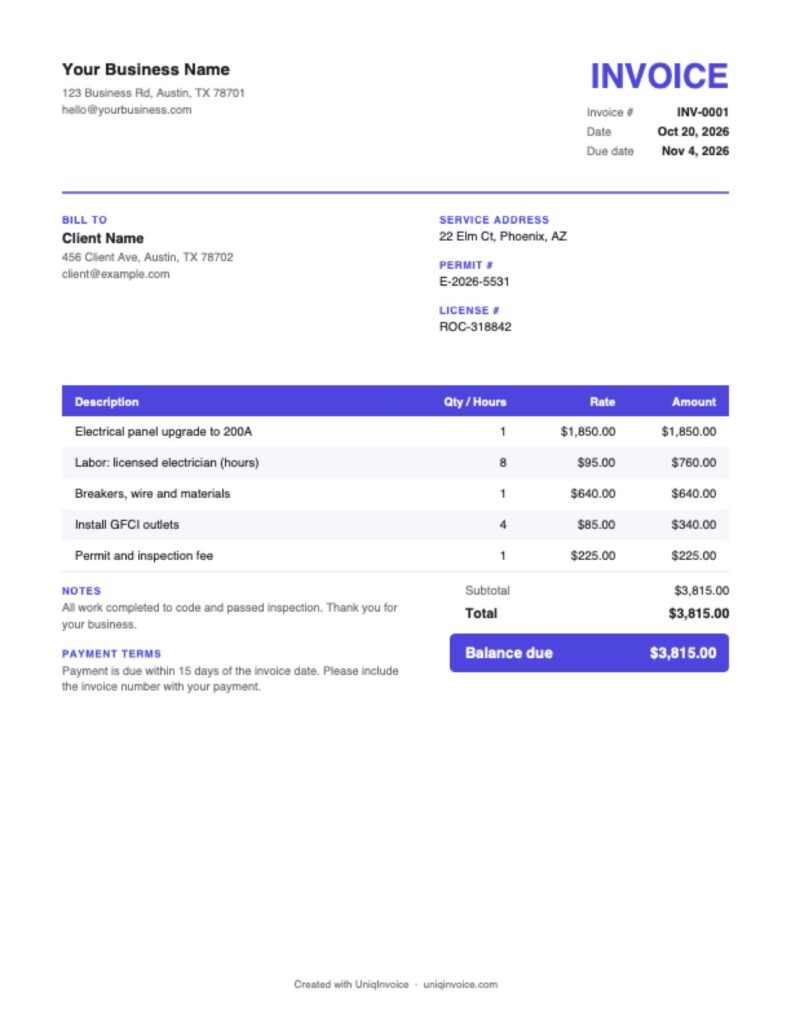
What is an electrician invoice?
An electrician invoice is the bill an electrical contractor sends after installation, repair or service work. It details the work performed, the materials used, permits and inspections, and the amount the customer owes. It is also an important record that the work was done by a licensed professional.
This free template is designed for residential and commercial electricians. It includes fields for the service address, permit number and license number, and it totals labor, materials, tax and the balance due automatically.
What to include on an electrician invoice
- Business and license details: your company name, contact details and electrical license number.
- Customer and service address: who you are billing and where the work was done.
- Invoice number and dates: invoice date, due date and, if you use them, job or work order numbers.
- Scope of work: panel upgrades, circuits, fixtures, outlets, troubleshooting or inspections.
- Labor: hours and rates for each electrician or a flat price per task.
- Materials: breakers, wire, devices, fixtures and other supplies.
- Permits and inspections: listed separately with the permit number.
- Tax, total and terms: sales tax where it applies and when payment is due.
How to fill out this electrician invoice template
- Add your logo, business details and license number.
- Enter the customer’s name, the service address and the permit number if there is one.
- Check the invoice number and dates. The due date is set 15 days ahead.
- Edit the sample lines for the work you did. Enter hours or quantities and rates.
- Add tax if it applies and any deposit or payment already received.
- Review the notes and payment terms, then download the PDF.
How electricians price their work
Flat-rate pricing works well for common jobs such as installing outlets, fixtures or a new panel, because the customer approves a fixed price. Hourly pricing suits troubleshooting and jobs where the wiring conditions are unknown. Many electricians combine both: a flat price for the main task and hourly rates for anything extra the customer approves on site.
Whatever you choose, make the invoice match the estimate the customer approved. If the scope changed, list the extra work on its own line with a short explanation.
Example line items for electrical work
Clear, specific line items help customers understand the value of the work. Here are common examples you can adapt:
- Troubleshooting and diagnostic, first hour
- Install new 20A dedicated circuit, kitchen
- Replace light fixture, customer supplied
- Install ceiling fan with new support box
- Level 2 EV charger installation, 50A circuit
- Whole-house surge protector
- Replace hardwired smoke detectors
When a job has many small tasks, group them by room or area. When the customer supplied the fixtures, say so, so they know they are only paying for labor and materials.
Tips to get paid faster
- Get approval before extra work. Written or text approval for add-ons prevents disputes later.
- Include inspection results. A note that the work passed inspection reassures the customer.
- Send the invoice the same day. The sooner the customer receives it, the sooner it gets paid.
- Keep track of open invoices. A clear list of paid, unpaid and overdue invoices helps you follow up at the right time.
With UniqInvoice you can create invoices on your phone, accept card payments and let automatic reminders follow up with customers for you.