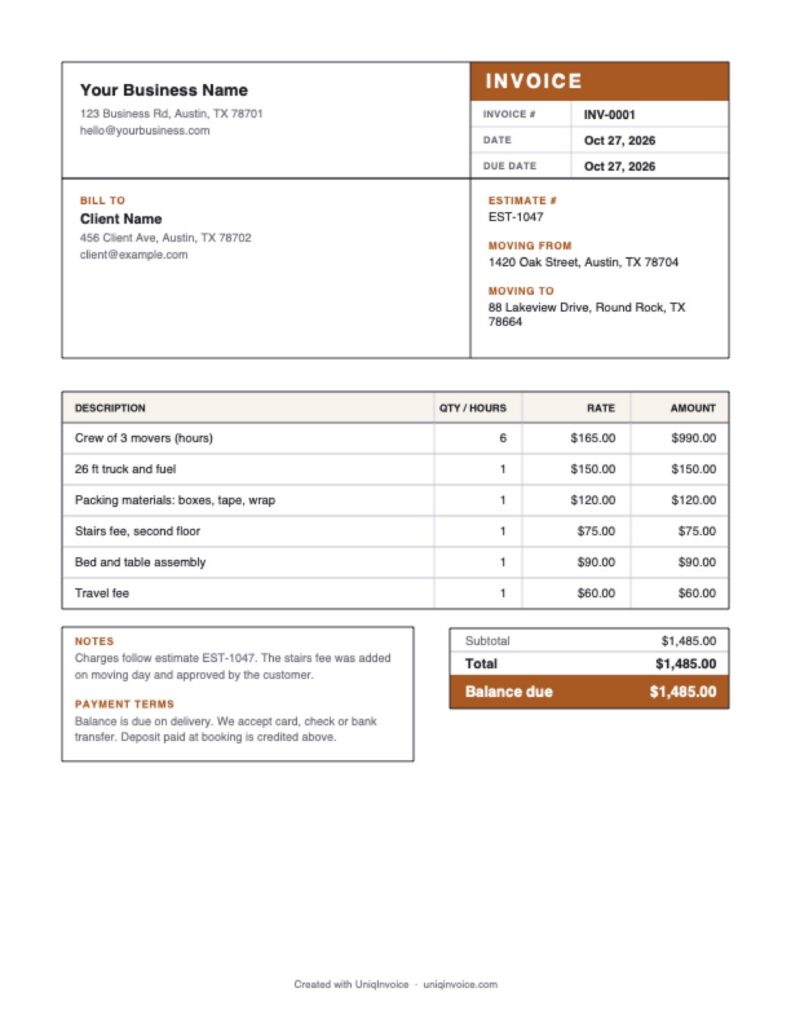
What is a moving company invoice?
A moving company invoice is the final bill a mover sends after a move. It lists crew hours, the truck, packing materials and any extra services, and it should match the estimate the customer agreed to, plus any changes they approved during the move.
This free template uses a boxed layout that reads like a moving order form. Your company details and invoice dates sit in a framed header, the estimate number and both addresses have their own boxes, and the line items are in a full grid. It works out the totals for you and downloads as a PDF.
What to include on a moving invoice
- Company details: your business name, phone, email and, for interstate moves, your USDOT number.
- Customer: the name, phone and email of the person who booked the move.
- Estimate number: the estimate or order the invoice is based on, so the customer can compare the two.
- Origin and destination: the pickup and delivery addresses.
- Labor: crew size, hours worked and the hourly rate.
- Truck and travel: the truck fee, fuel and any travel or trip charge.
- Materials: boxes, tape, stretch wrap and mattress bags you supplied.
- Extra services: stairs, long carries, assembly, and piano or appliance handling.
- Deposit and terms: the deposit already paid, the balance and when it is due.
How to fill out this moving company invoice template
- Add your logo and company details in the top box.
- Enter the customer, the estimate number and both addresses.
- Check the invoice number and dates. The due date matches the invoice date, since most moves are paid on delivery.
- Edit the crew hours, truck fee, materials and extra services.
- Enter the deposit in Amount paid so the balance is right.
- Review the notes and terms, then download the PDF.
How movers price a move
Hourly rate
Common for local moves. The rate usually covers a set crew and the truck, billed from arrival until unloading is done, often with a minimum number of hours. Write down the start and finish times so the hours on the invoice are easy to check.
Flat rate
A fixed price based on an inventory of what is being moved. If the customer adds items or services on moving day, list them as separate lines instead of changing the flat rate.
Weight and distance
Long-distance moves are often priced by the weight of the shipment and the miles driven, with extra charges for packing and other services. Weight tickets back up the charge.
Matching the invoice to the estimate
Customers compare the final bill with the estimate line by line, so keep the same wording and order. For interstate moves in the US, federal rules treat estimates differently. With a binding estimate, the customer pays the estimated price plus any services they add. With a non-binding estimate, the mover can’t require more than 110 percent of the estimate at delivery and bills the rest after 30 days. Local moves follow state rules, which vary. In every case, put the estimate number on the invoice and show changes as their own lines, with a note on who approved them.
Tips to get paid on moving day
- Take a deposit at booking. It holds the date and makes last-minute cancellations less likely.
- Get changes approved first. Have the customer agree to added services before the crew starts on them.
- Have the invoice ready before unloading ends. Customers pay faster while the crew is still there.
- Take cards on the spot. A payment link avoids waiting days for a check.
UniqInvoice lets movers send invoices from a phone, accept card payments on moving day and send automatic reminders for any balance left.