What is an interior design invoice?
An interior design invoice is the bill an interior designer or design studio sends for design services and, often, for the furniture and materials purchased for the client. A single project can include consultations, concept work, floor plans, sourcing, procurement and installation, so the invoice needs to separate design fees from purchases and make it clear what each phase cost.
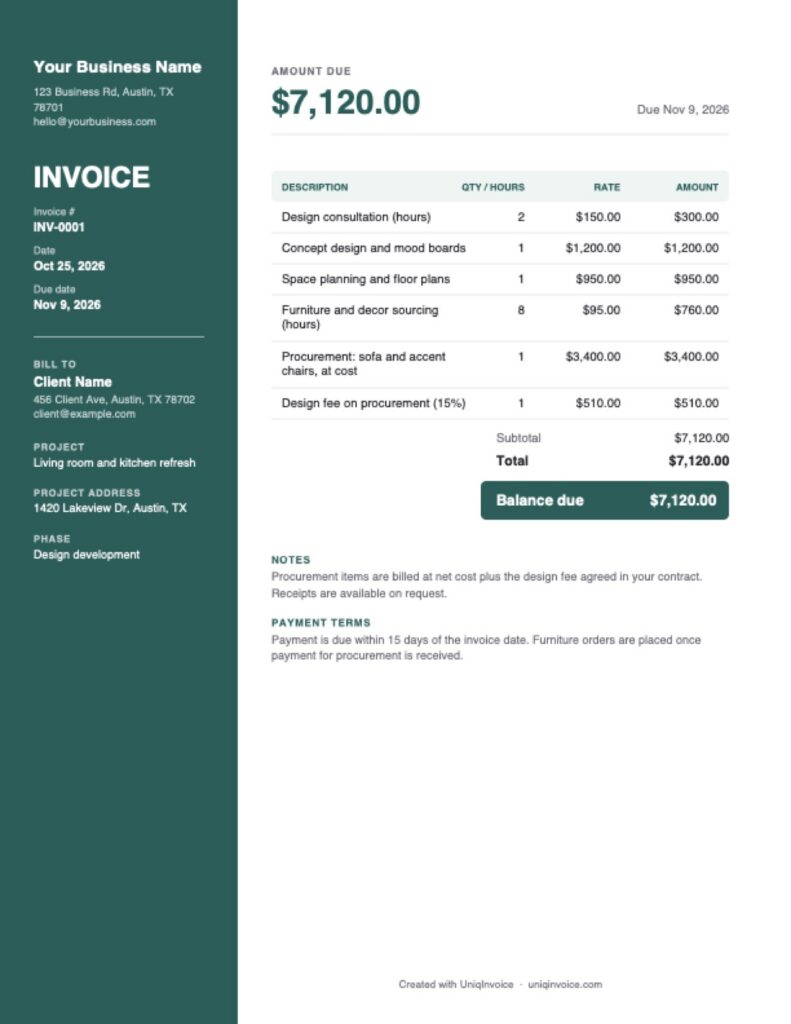
This free template uses a sidebar layout: your studio details, the invoice dates, the client and the project information sit in a colored column on the left, and the line items, totals and amount due are on the right. It includes fields for the project, project address and phase, and calculates everything for you.
What to include on an interior design invoice
- Studio details: your business name, website, email and phone.
- Client and project: the client, project name, project address and the current phase.
- Invoice number and dates: a unique number, the invoice date and the due date.
- Design fees: consultations, concept design, mood boards, space planning and drawings.
- Hourly work: sourcing, site visits and project management with hours and rates.
- Procurement: furniture, lighting, fabrics and decor, at cost or as agreed.
- Design fee or markup: the agreed fee on purchases, shown on its own line.
- Payments and terms: retainers received, the balance due and when orders will be placed.
How to fill out this interior design invoice template
- Add your logo and studio details at the top of the colored sidebar.
- Enter the client, the project name, the project address and the phase.
- Check the invoice number and dates. The due date is set 15 days ahead.
- Edit the sample lines for design fees, sourcing hours and procurement.
- Enter any retainer or payment already received in Amount paid.
- Review the notes and terms, then download the PDF.
How interior designers price their services
Flat design fee
A fixed price for a defined scope, such as designing one room or a full home. Often billed in phases.
Hourly
An hourly rate for consultations, sourcing and project management. Track your time so the invoice is easy to review.
Cost-plus or percentage
Furniture and materials billed at net cost plus an agreed percentage, or a fee based on the total project cost. State the method in your contract and show it clearly on each procurement invoice.
Billing procurement without carrying the cost
Furniture orders can be large, and many pieces are custom or non-returnable. To avoid paying vendors before your client pays you, invoice procurement separately from design work and ask for payment before you place orders. List each item or room on its own line, include lead times in the notes if they matter, and keep vendor receipts on file. Clear procurement invoices also make it easier to handle returns, damages and back orders later.
Tips to get paid faster
- Bill by phase. Smaller invoices at each milestone are easier for clients to approve than one large bill.
- Separate fees from purchases. Clients understand the invoice faster when design work and furniture are not mixed.
- Collect before you order. Ask for procurement payment before placing furniture orders.
- Follow up on time. A friendly reminder before the due date keeps projects on schedule.
UniqInvoice helps interior designers send phase and procurement invoices, track what each client has paid and send automatic reminders.