What is an architecture invoice?
An architecture invoice is the bill an architect or design studio sends for design work on a project. Most projects run for months and are billed in stages, so the invoice usually covers part of a phase, plus any extra services and expenses the client agreed to pay for along the way.
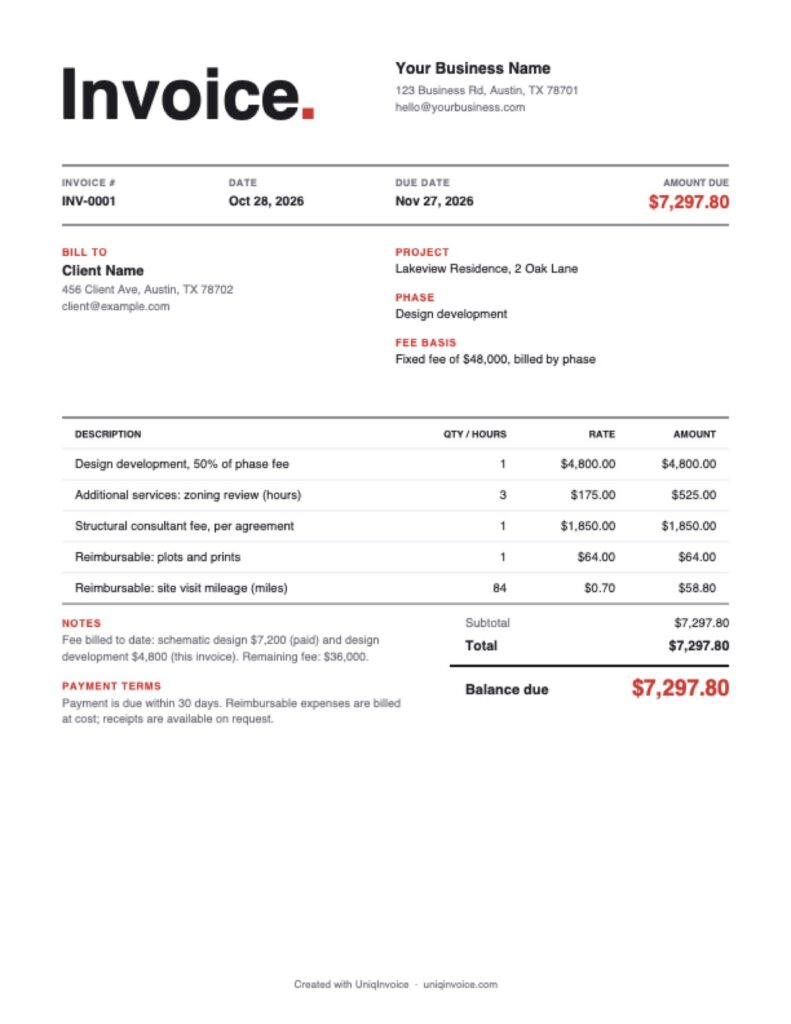
This free template uses a Swiss-style layout: a large headline, a strict grid and thin rules above each section, with the amount due shown next to the invoice dates. It has fields for the project, the current phase and the fee basis, and it works out the totals for you.
What to include on an architecture invoice
- Firm details: your firm name, license number if your state requires it, address, email and phone.
- Client and project: who you are billing, the project name and the site address.
- Invoice number and dates: a unique number, the invoice date and the due date.
- Phase fee: the phase you are billing and how much of it is complete.
- Additional services: work outside the agreed scope, with hours and your rate.
- Consultants: structural, MEP or landscape consultant fees, if you bill them through your firm.
- Reimbursables: printing, travel and permit or application fees, at cost or as agreed.
- Fee to date: the total fee, what has been billed so far and what remains.
How to fill out this architecture invoice template
- Add your logo and firm details next to the headline.
- Enter the client, the project, the current phase and the fee basis.
- Check the invoice number and dates. The due date is set 30 days ahead.
- Edit the sample lines for the phase fee, extra services and reimbursables.
- Update the fee summary in the notes and enter any payment received in Amount paid.
- Review the terms, then download the PDF.
How architects charge for their work
Fixed fee
A set price for an agreed scope, split across the design phases. It is easy for clients to budget for, but it needs a clear scope so extra work can be billed separately.
Percentage of construction cost
The fee is a percentage of what the building costs to build. Invoices are often based on the estimated construction cost and adjusted once the actual cost is known.
Hourly
Common for small projects, feasibility studies and additional services. Keep time records by task so the hours on the invoice are easy to review.
Billing by phase
Architecture contracts usually divide the fee across phases: schematic design, design development, construction documents, bidding or negotiation, and construction administration. The split is set in your agreement. One common pattern puts the largest share on construction documents, where most of the drawing work happens. Each invoice then bills the completed share of the current phase. If design development is worth $9,600 and the phase is half done, this month’s invoice includes $4,800 for it. Showing the fee billed to date in the notes lets the client check the running total without digging through old invoices.
Tips to get paid faster
- Invoice on a set day each month. Clients get used to the timing and plan for it.
- Keep extras separate. Bill additional services on their own lines and refer to the client’s written approval.
- Attach backup for reimbursables. Receipts or a short log avoid questions about small charges.
- Show where the project stands. A fee-to-date summary makes the invoice easier to approve.
UniqInvoice helps architects send phase invoices from a phone or computer, track what each client has paid and send automatic reminders.