What is a music lessons invoice?
A music lessons invoice is the bill a music teacher or small studio sends for lessons. Most teachers bill families once a month for a set number of lessons, plus the occasional extra: a make-up lesson, a new book, a recital fee. The invoice should make the monthly amount easy to recognize and the extras easy to spot.
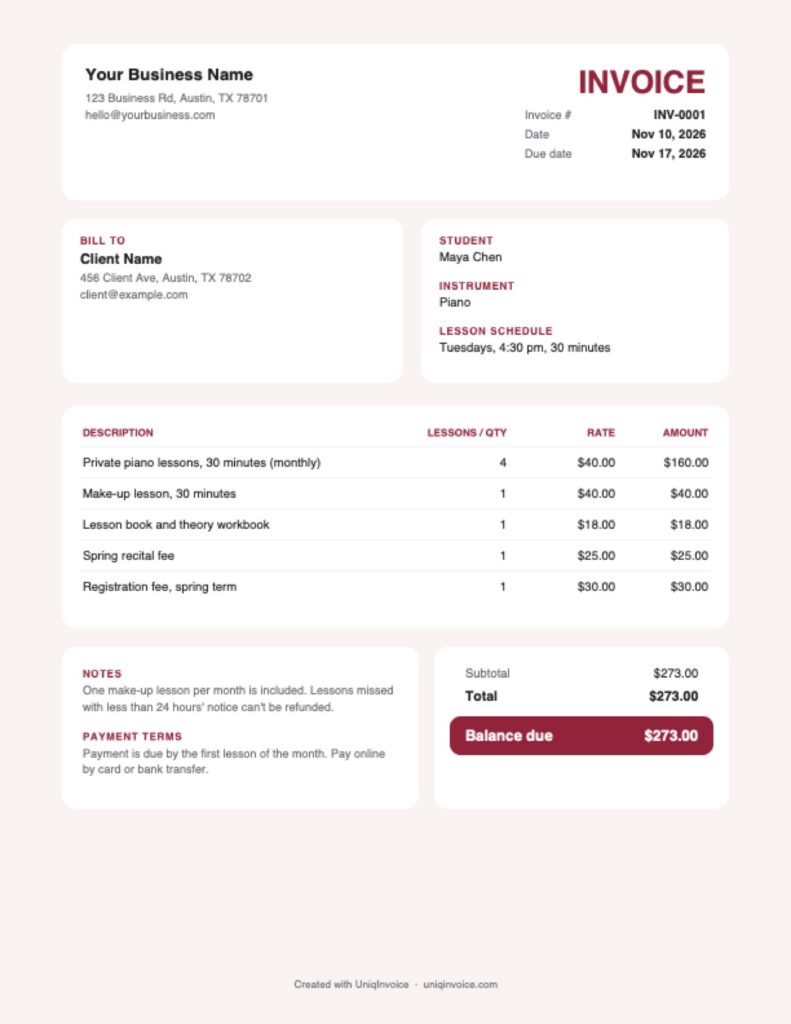
This free template uses a card layout. Each part of the invoice, from your details and the family you bill to the lessons and the totals, sits on its own white card on a soft colored background. It has fields for the student, the instrument and the lesson schedule, and it works out the totals for you.
What to include on a music lessons invoice
- Teacher or studio details: your name or studio name, email, phone and website.
- Who pays: the parent or guardian for younger students, or the adult student.
- Student and lessons: the student’s name, instrument, lesson day and length.
- Invoice number and dates: a unique number, the invoice date and the due date.
- Lessons: the number of lessons in the period and the rate per lesson.
- Extras: make-up lessons, books, sheet music, recital or exam fees.
- Studio policy: a short line on missed lessons and make-ups.
- How to pay: online by card, bank transfer or another method you accept.
How to fill out this music lessons invoice template
- Add your logo and teaching details on the top card.
- Enter the parent or student you are billing, then the student, instrument and schedule.
- Check the invoice number and dates. The due date is set 7 days ahead.
- Edit the number of lessons and the sample extras.
- Enter any payment already received in Amount paid.
- Review the notes and terms, then download the PDF.
How music teachers price lessons
Monthly tuition
A fixed amount each month for a set number of lessons. Families get a predictable bill and you get a steady schedule. Some teachers average the fee over the year so months with five lesson days cost the same as months with three.
Per lesson
Each lesson is billed as it happens, often with payment at the lesson. It suits adult learners and students who come every other week.
Packages and terms
A block of lessons paid up front, such as ten lessons or a full term, sometimes at a small discount. Show the number of lessons left on each invoice so the family knows when the next package is due.
Missed lessons without awkward conversations
Missed lessons are where most billing friction comes from. Put your policy in writing before the first lesson, repeat it in the notes on every invoice, and bill make-up lessons on their own line. When a parent asks why the amount changed, the invoice already answers the question. If you allow one make-up per month, say so plainly, and you rarely need to have the conversation at all.
Tips to get paid faster
- Bill before the month starts. Payment by the first lesson keeps your schedule and income steady.
- Use recurring invoices. The same lessons each month can go out automatically.
- Offer card payment. Parents can pay from their phone instead of finding a check.
- Remind before the due date. A friendly nudge a day or two ahead is usually enough.
UniqInvoice lets music teachers set up recurring monthly invoices for each family, accept card payments and send automatic reminders.